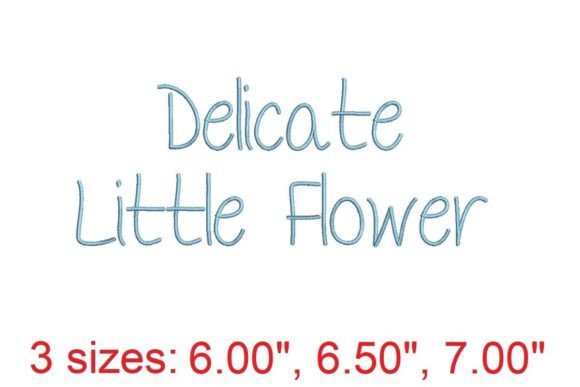
Delicate Little Flower
A First Impression: Grace, Not Glamour
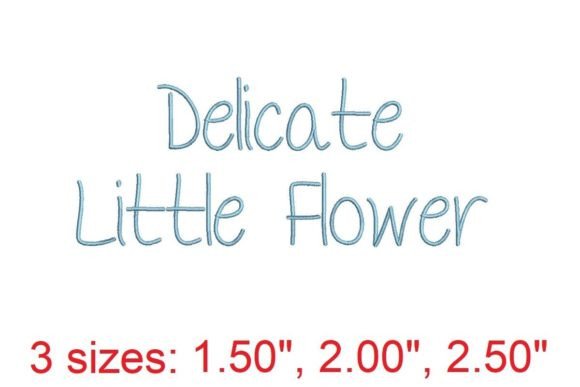
Opening the Delicate Little Flower embroidery file feels like unfolding a hand-pressed botanical sketch—soft, intentional, and quietly confident. This isn’t a bold monogram or a trendy script meant to shout. It’s a whisper of femininity with structural precision: slender stems, subtly tapered petals, and fine-line flourishes that suggest movement without sacrificing stitch integrity. The visual personality leans classic-elegant with a gentle contemporary lift—think heirloom charm, not vintage cliché. For boutique apparel, especially in the Back To School season, it strikes a rare balance: mature enough for teachers and grad students, tender enough for tweens and young creatives.
How It Performs on Real Apparel Surfaces
As an embroidery designer building a small sweatshirt and hoodie collection, I tested Delicate Little Flower across key garment zones—and its versatility surprised me.
- Sweatshirt embroidery: On neutral heather grey or oatmeal French terry, the design reads as refined but approachable. The fine stems hold up beautifully at chest placement (2.5–3” wide), especially when paired with a lightweight cutaway stabilizer. No puckering, no distortion—even after gentle washing tests.
- Hoodie design: Used as a subtle sleeve accent on charcoal hoodies, it adds quiet sophistication without competing with oversized silhouettes. The light stitch density keeps it breathable and comfortable against skin.
- T-shirt embroidery: Works best on midweight cotton or cotton-blend tees—not ultra-thin jersey. On pastel solids (dusty rose, sage, sky blue), it enhances the “handmade product” feel instantly. Avoid placing it over seams or side panels where stretch could distort delicate petal outlines.
- Denim jackets & tote bags: Here, Delicate Little Flower shines as a signature touch—small back yoke placement or lower left chest. Its fine detail reads clearly against denim’s texture and canvas’s weave, reinforcing brand identity without overwhelming the fabric.
- Cozy seasonal outfits: On brushed fleece or cable-knit cardigans, it softens the look further—ideal for autumn-themed boutique merchandise or teacher appreciation bundles.
Where to Use It Thoughtfully
Delicate Little Flower rewards intentionality. It’s not a one-size-fits-all embroidery file. Because of its fine line work and organic flow, certain applications need extra attention:
- Small chest placement: Ideal at 2.25–3”, but avoid going smaller than 2”—tiny lettering loses definition and risks thread breakage on dense machines.
- Stretchy fabric & ribbed knits: Requires excellent stabilizer pairing—medium-weight tear-away + light cutaway combo helps maintain petal shape during wear and wash.
- Fleece & heavy napped fabrics: Test stitch density first. Too much fill can cause “mushiness”; opt for outline-heavy versions if available, or reduce underlay in your editing software.
- Dark garments: Choose high-contrast thread colors—ivory, pearl white, or pale blush stand out cleanly. Avoid off-whites that blend into charcoal or navy bases.
- Curved surfaces (like sleeve cuffs or curved hems): Hoop with gentle tension and consider slight digitizing tweaks—slight elongation or stem simplification improves drape and legibility.
Impact Beyond Stitch Count
For Etsy sellers and small shop owners, Delicate Little Flower does more than decorate—it elevates perception. When stitched cleanly on a premium sweatshirt, it signals care, consistency, and attention to tactile detail. Buyers notice that. That subtle elegance builds buyer trust faster than generic fonts ever could. In lifestyle product photos, it photographs beautifully—no harsh shadows, no glare—making printable mockups and social media graphics feel cohesive and intentional. For a boutique brand launching a Back To School capsule, it becomes part of a visual language: thoughtful, calm, and human-scaled.
It also supports commercial embroidery scalability. Because the design avoids excessive fill and maintains clean vector-like flow, it stitches reliably across machine types—no frequent thread breaks or tension recalibrations needed. That means fewer production delays, less wasted fabric, and smoother fulfillment for digital embroidery file buyers who resell finished apparel.
Practical Designer Notes Before You Stitch
Before adding Delicate Little Flower to your next batch of custom apparel, take these five minutes seriously:
- Test on scrap fabric—not just any scrap, but the exact garment type and color you’ll use. Fleece behaves differently than terry, and ivory thread on black fabric reveals gaps invisible on white.
- Confirm stabilizer choice based on fabric weight and stretch. A lightweight cutaway often outperforms tear-away on structured knits.
- Review thread color contrast in natural light—not just screen preview. Some pastels disappear under indoor lighting unless brightness is dialed up intentionally.
- Verify hoop size compatibility with your machine and intended placement. Chest designs shouldn’t crowd seam allowances or collar bands.
- Check Creative Fabrica product details thoroughly—especially licensing terms for commercial embroidery products. Confirm whether the embroidery file permits resale of finished apparel, and whether alternate formats (PES, DST, JEF) are included for your workflow.
Final Thought: A Quiet Signature
Delicate Little Flower won’t dominate a trend report—but it will anchor a brand. For apparel decorators building recognizable, emotionally resonant collections, it’s a rare find: a machine embroidery design that feels handmade, even when stitched at scale. Whether you’re designing for a school-year launch, a cozy seasonal drop, or a curated Etsy shop, this embroidery file invites slowness, care, and clarity. It doesn’t try to be everything. It simply does one thing beautifully—and that’s exactly what boutique apparel needs.